

Learning the ukulele should quickly lead to something essential: the pleasure of making music from the very first lessons.
I offer private ukulele lessons in Zurich for small children, children, teenagers and adults who want to discover this accessible and expressive instrument through a clear, progressive and personalized approach.
From the first chords and songs, we develop rhythm, coordination and good playing habits while gradually exploring how melodies, chords and musical patterns work together. The ukulele makes it possible to accompany songs very early on, while also providing an excellent foundation for developing broader musical skills.
Whether you are holding a ukulele for the first time or already know a few chords and want to expand your playing, lessons are adapted to your age, musical tastes, goals and experience.
I teach ukulele lessons in French, English or German at NiQo Music School in Dübendorf, Zurich, in a calm and inspiring environment.
Ukulele Lessons for all
Accessible
Welcoming from the very beginning
With only four strings and a compact, lightweight body, the ukulele is comfortable to hold and easy to explore. Its size makes it especially suitable for younger players and small hands, while remaining an enjoyable instrument at any age.
Immediate
Make music from the very first lessons
A few simple chords are enough to start accompanying real songs. This quick sense of achievement makes the ukulele particularly rewarding for beginners and helps build enthusiasm and confidence from the start.
Musical
Small but real musical possibilities
Behind its apparent simplicity, the ukulele offers plenty to explore. Chords, rhythm, melodies and different strumming patterns provide a playful introduction to essential musical skills — and a foundation that can continue to grow with the player.
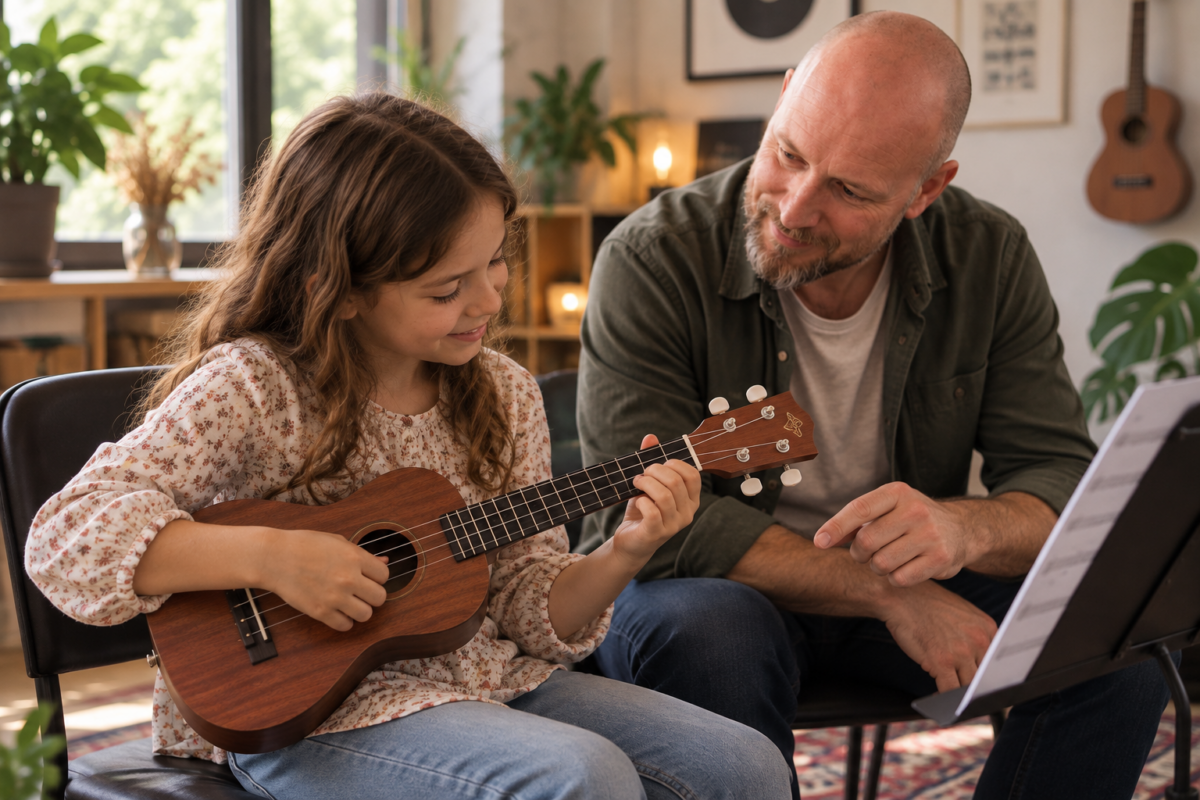
An Easy Start, a Real Sense of Progress
The ukulele has a rare quality for a musical instrument: it feels approachable almost immediately. Its compact size and comfortable proportions make the first physical steps easier, particularly for children and smaller hands, leaving more space to concentrate on rhythm, listening and the pleasure of playing.
That accessibility also means that musical results can come surprisingly quickly. With just a few chords and a simple rhythmic pattern, beginners can already accompany complete songs and hear their progress from one lesson to the next.
This creates a positive learning dynamic: new skills are introduced through music rather than as isolated exercises. Technique and coordination develop progressively, while each new chord, rhythm or pattern opens the door to more songs and greater confidence.
A Small Instrument with a Big Voice
The ukulele may be simple to approach, but it should not be mistaken for a simplified guitar or merely a beginner’s instrument. Its distinctive tuning, resonance and rhythmic character give it a musical identity of its own — one that can be explored far beyond the first few chords.
Artists have demonstrated just how expressive that small four-string instrument can be. French songwriter Thomas Fersen has reimagined his repertoire around the ukulele, while Eddie Vedder devoted an entire solo album, Ukulele Songs, to original pieces and new arrangements centred on the instrument.
That is also where learning can lead. Beyond accompaniment, students can explore melody, fingerpicking, different rhythmic styles, arrangements and their own musical ideas. Accessible at the beginning does not mean limited afterwards.

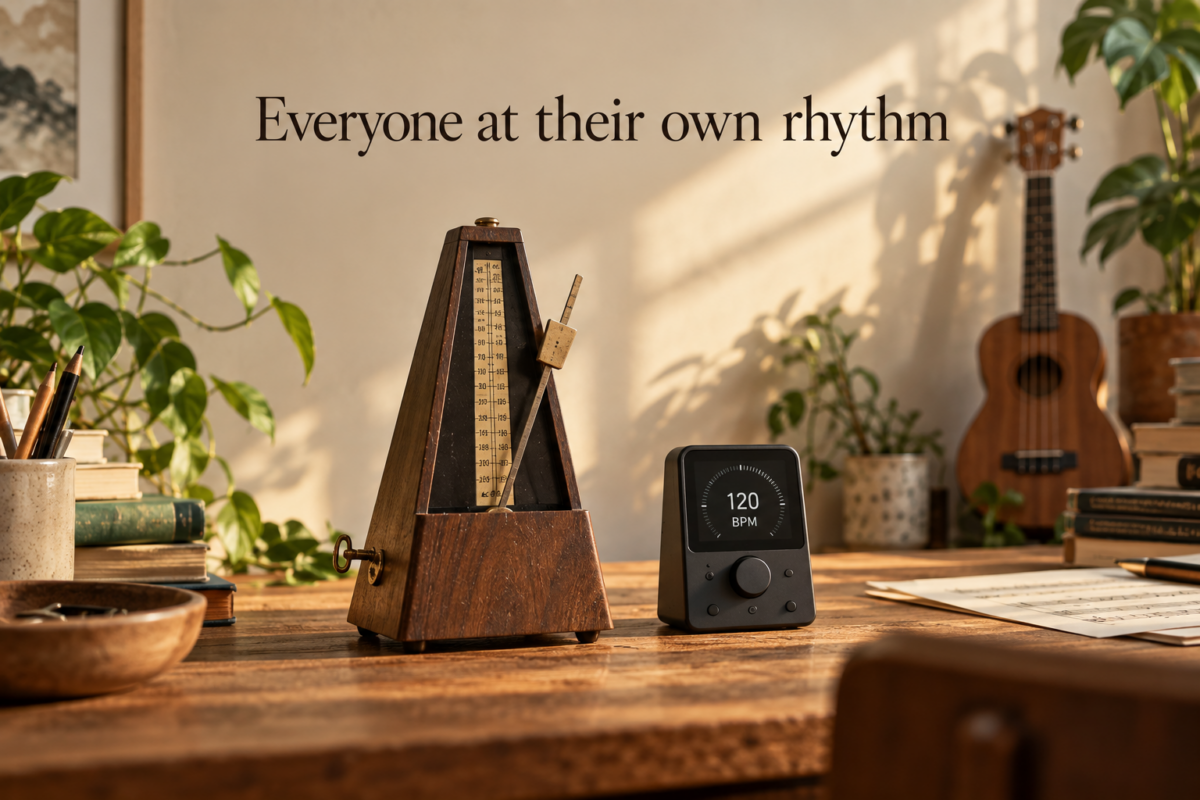
Flexible Ukulele Lesson Formats
Learning an instrument should find its place naturally in everyday life. I therefore offer several ways to take ukulele lessons — from individual sessions and 4-lesson packs to a full semester plan — with lessons of 30, 45 or 60 minutes.
The right format depends on the student. Younger children may benefit from shorter, regular sessions, while teenagers and adults may prefer longer lessons or greater flexibility around their schedules. Together, we can choose an arrangement that provides enough continuity to progress without creating unnecessary constraints.
Whatever the format, the same principles remain: personalized teaching, clear progression and lessons adapted to each student’s age, experience and musical interests.
Competitive & Transparent Pricing
From CHF 48.– / lesson
- Tailored one-to-one teaching for children, teens and adults
- Available in French, English or German
- Choose between 30, 45 or 60-minute formats
- Flexible scheduling : single lessons, packs or semester plan
- Calm, inspiring atmosphere at NiQo Music School (Dubendorf, Zurich)
The ukulele makes music accessible — without making it simplistic.
One of the ukulele’s greatest strengths is the short distance between discovering the instrument and actually making music with it. Its compact size, four strings and accessible first chords allow beginners to focus quickly on rhythm, listening and the pleasure of playing.
This is one reason why the ukulele has found such a natural place in music education. Students can begin accompanying songs at an early stage, while gradually discovering broader musical concepts such as harmony, rhythm, melody and ensemble playing.
Rather than simplifying music, the ukulele provides a remarkably direct way into it — turning musical ideas into something students can hear, play and share from the very beginning.
To discover another perspective on why the ukulele works particularly well as an introduction to music for young learners, I suggest this article:
Adding Music to Your Classroom With a Ukulele — Edutopia
Got questions?
Feel free to reach out.